Initial Scoping & Data Mapping
Identify systems, processes, and departments handling PHI. Map the flow of sensitive health information across the organization.
1-2 weeks

Protect sensitive healthcare information, strengthen security controls, and achieve HIPAA compliance with expert guidance from SurkshaNow.
Whether you are a healthcare provider, HealthTech company, SaaS platform, medical billing provider, or business associate handling Protected Health Information (PHI), our experts help you build a practical and audit-ready HIPAA compliance program.
HIPAA compliance applies to organizations handling, transmitting, or storing health data of U.S. patients globally
Healthcare providers (doctors, clinics, hospitals), health plans (insurance companies, HMOs, Medicare), and clearinghouses that convert nonstandard health data into standard formats.
Third-party administrators, consultants, auditors, medical transcription services, billing providers, IT & data backup providers, and SaaS platforms that handle PHI.
Hybrid entities (universities with research and medical operations), subcontractors hired by business associates, and researchers accessing PHI for clinical studies.
Comprehensive evaluation of your organization's compliance with HIPAA Privacy, Security, and Breach Notification Rules
Identify systems, processes, and departments handling PHI. Map the flow of sensitive health information across the organization.
Review policies, procedures, and operational practices. Compare current practices against HIPAA requirements, including Privacy Rule, Security Rule, and Breach Notification Rule.
Assess potential vulnerabilities in administrative, technical, and physical safeguards. Identify threats to data confidentiality, integrity, and availability.
Examine security controls, access management, encryption, and audit trails. Evaluate employee awareness and training programs on HIPAA policies.
Provide a prioritized roadmap to address compliance gaps. Recommend process improvements, technological safeguards, and training measures.
Deliver detailed assessment reports suitable for internal governance or external audit readiness. Prepare organizations for voluntary HIPAA certifications or regulatory audits.
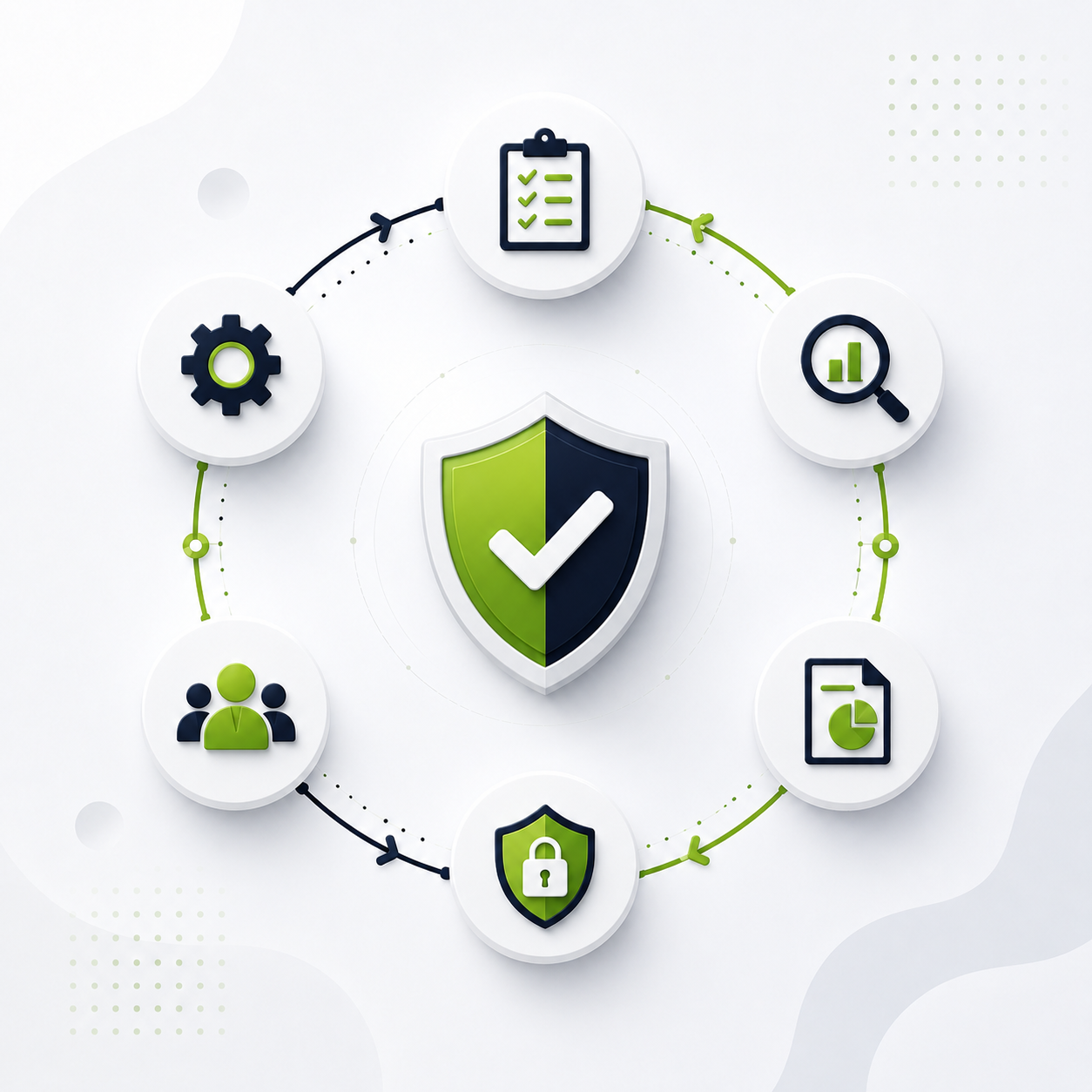
HIPAA establishes mandatory safeguards to ensure that Protected Health Information (PHI) stays secure, private, and confidential. A HIPAA assessment reviews whether the required administrative, physical, and technical controls are in place and operating effectively across your systems.
For patients and stakeholders, HIPAA compliance is more than a legal requirement — it’s a sign of trust, responsibility, and a strong commitment to protecting sensitive health data.
Remember: HIPAA isn’t just about meeting regulations. It proves your organization values privacy, security, and the confidence of those who rely on your care.
Surkshanow Partners – Your Trusted HIPAA Compliance Partner
Global expertise, technical rigor, and regulatory knowledge for thorough HIPAA compliance
Our team brings international experience with healthcare regulations, risk management, and compliance frameworks.
Assess administrative, technical, and physical safeguards, covering all aspects of HIPAA compliance.
Recommendations customized based on your organization's size, industry, and operational requirements.
Our auditors and consultants have deep knowledge of healthcare regulations, security best practices, and risk management.
Clear reporting and remediation plans help strengthen compliance and reduce risk exposure.
Prepare confidently for internal audits, third-party assessments, or voluntary HIPAA certifications.

Evaluating organizational frameworks to ensure structural integrity and compliance.
US healthcare regulation safeguarding Protected Health Information (PHI). Defines strict administrative, physical, and technical safeguards for medical data security and privacy.
Healthcare Compliance Specialists
Ex-Big Four Regulatory Leadership
End-to-End HIPAA Security & Privacy Advisory
Trusted by HealthTech & Medical Innovators
Strengthen your security posture with our comprehensive suite of compliance services
Ensure your organization meets FedRAMP requirements and protects sensitive government information effectively
Protect cardholder data and achieve Payment Card Industry compliance
Ensure compliance with European data protection regulations for healthcare data
HIPAA does not provide official certifications. Organisations demonstrate HIPAA compliance through independent HIPAA assessments and audits for validated readiness.
HIPAA treats encryption as “addressable.” Organizations achieve HIPAA compliance by applying encryption or an equivalent safeguard, verified through a HIPAA assessment.
Achieving HIPAA compliance requires documented policies for access control, incident response, risk management, training, and technical safeguards. A structured HIPAA assessment ensures all required documentation meets regulatory expectations.
Yes. HIPAA compliance requires role-based training for employees who access or manage PHI. A structured HIPAA assessment ensures training aligns with regulatory expectations.
The Breach Notification Rule is a core part of HIPAA compliance. It requires organizations to notify affected individuals, HHS, and in some cases the media after unsecured PHI incidents. A structured HIPAA assessment helps ensure reporting procedures are audit-ready.
A Business Associate Agreement (BAA) is a legally binding contract requiring vendors handling PHI to meet HIPAA compliance obligations. A formal HIPAA assessment helps ensure third-party safeguards align with regulatory requirements.
Most HIPAA compliance audit services are completed within 4–12 weeks, depending on organizational size and complexity. A prior HIPAA assessment can streamline timelines and improve readiness.
Yes. Telehealth providers handling PHI must maintain full HIPAA compliance, including privacy and security safeguards for virtual platforms. A structured HIPAA assessment helps ensure systems, workflows, and vendors meet regulatory standards.
HIPAA Compliance Cost depends on organizational size, risk exposure, and remediation scope. Expenses typically include a formal HIPAA assessment, policy development, technical safeguards, and validation through hipaa compliance audit services. Structured engagement reduces penalties and protects long-term operational continuity.
HIPAA regulations are enforced by the OCR under HHS. Organisations maintain HIPAA compliance through audits and HIPAA compliance audit services to reduce risk.