What is SOC 2 Certification? A Complete Guide for SaaS Companies (2026)
Learn what SOC 2 certification is, its benefits, process, costs, timeline, and how SaaS companies can prepare for a successful audit.
Read More →
With more companies moving to the cloud and SaaS tools working together, enterprise buyers are placing greater focus on vendor data security. If your business handles sensitive customer data, potential clients will likely ask, "Are you SOC 2 compliant?"
Getting SOC 2 compliant is not the same for every business. The American Institute of Certified Public Accountants (AICPA) offers two options: SOC 2 Type 1 and SOC 2 Type 2. Picking the wrong one can waste money, slow down deals, or cause your security questionnaires to be rejected.
This guide explains the main differences between SOC 2 Type 1 and Type 2, compares their costs and timelines, covers what you need for compliance, and helps you decide which report fits your business goals now and in the future.
SOC 2 (which is known as System and Organization Controls 2) is a voluntary security framework created by the AICPA; it was mainly designed for technology service providers, SaaS companies, and cloud vendors and assesses the effectiveness with which an organization protects customer data by referring to five Trust Services Criteria (TSC).
While only Security is mandatory for every audit, organizations choose additional criteria based on their product offerings and client requirements.
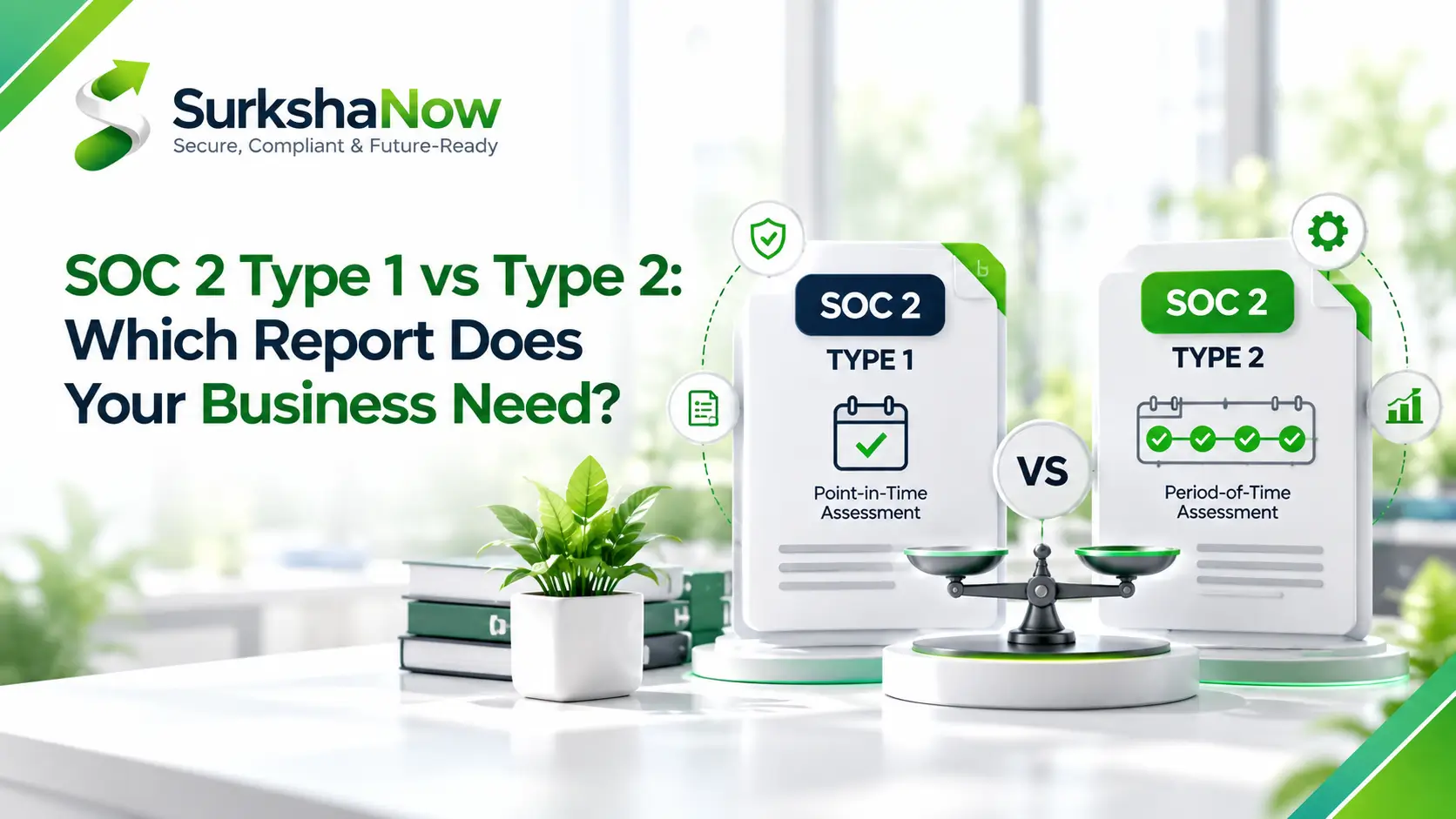
A SOC 2 Type 1 report evaluates the design of an organization's security controls at one particular point in time.
A Type 1 report can be regarded as a detailed snapshot of your security environment on a particular date (for example, as of October 31); an independent CPA auditor examines your security policies, system architecture, and the descriptions of your controls to confirm that your security framework is properly designed to meet the selected Trust Services Criteria.
A SOC 2 Type 2 report evaluates both the design and the operational effectiveness of your security controls over a sustained historical period—typically 6 to 12 months (with 3 months being the minimum for initial audits).
Where Type 1 asks, "Did you design proper controls?", Type 2 asks, "Did you actually follow those controls consistently over time?"
During a Type 2 audit, independent auditors collect continuous evidence (e.g., access logs, background check records, change management tickets, and vulnerability scan logs) throughout the observation window to confirm the absence of operational breakdowns.
To help guide your decision, here is how SOC 2 Type 1 and Type 2 compare across critical business metrics:
| Comparison Metric | SOC 2 Type 1 | SOC 2 Type 2 |
| Audit Focus | Design suitability of security controls | Operational effectiveness & design over time |
| Time Frame | Single point in time (e.g., "As of Nov 15") | Continuous period (typically 6 to 12 months) |
| Preparation & Duration | 2–6 weeks | 6–12 months (observation period) |
| Buyer Trust Level | Moderate (Good for closing initial SMB deals) | High (Required for enterprise procurement teams) |
| Audit Cost | Lower upfront cost | Higher cost due to continuous evidence sampling |
| Evidence Required | Policy documents, architecture diagrams, control descriptions | Historical logs, tickets, automated screenshots, employee records |
Achieving either report requires implementing foundational security controls across your organization. Key technical and operational requirements include:
Determining whether your business requires a SOC 2 Type 1 or Type 2 report depends on your company’s maturity, growth stage, sales pressure, and resource availability.
Getting SOC 2 compliance can be complicated, resource-intensive, and confusing without expert help. SurkshaNow makes your compliance journey easier by providing expert GRC consulting, risk assurance, and audit management tailored to your growth rate.
Whether you need a rapid SOC 2 Type 1 report to unlock pending sales or an end-to-end SOC 2 Type 2 strategy for long-term enterprise growth, SurkshaNow delivers faster, smarter compliance.
Choosing between SOC 2 Type 1 vs Type 2 boils down to timing and business maturity. While Type 1 provides a fast, effective solution to unlock immediate sales, Type 2 serves as the gold standard for long-term customer trust and enterprise-grade security assurance.
Are you ready to build trust, meet buyers' security requirements, and accelerate your growth?
Partner with SurkshaNow Today to get a tailored compliance roadmap, complete a gap analysis, and achieve seamless SOC 2 readiness.
Yes. There is no regulatory requirement to complete a Type 1 audit before a Type 2 audit. If your security controls are fully implemented and mature, you can start a Type 2 observation window immediately.
A SOC 2 report covers a specific historical period. Enterprise buyers typically expect an updated SOC 2 Type 2 report every 12 months to ensure continuous compliance monitoring.
SOC 2 costs vary based on organization size, scope, and selected criteria. Type 1 audits typically cost less because they involve fewer audit hours, whereas Type 2 audits incur higher costs for CPA firms due to extensive sampling over time. Utilizing compliance partners like SurkshaNow significantly reduces overall implementation time and auditor fees.
No. SOC 2 is a voluntary framework, not a government regulation. However, it is widely regarded as mandatory by B2B SaaS buyers and enterprise procurement teams globally.
?
Learn what SOC 2 certification is, its benefits, process, costs, timeline, and how SaaS companies can prepare for a successful audit.
Read More →Discover how much SOC 2 compliance actually costs for SaaS companies and how to get audit-ready with zero hidden fees.
Read More →With the DPDP Rules notified, Indian businesses face strict compliance milestones leading to May 2027. Discover the phase-by-phase timeline, key requirements, and how SurkshaNow simplifies your DPDP Act implementation.
Read More →